
Airlines are rethinking premium hospitality through better products, more choice, personalized service, and stronger crew support.
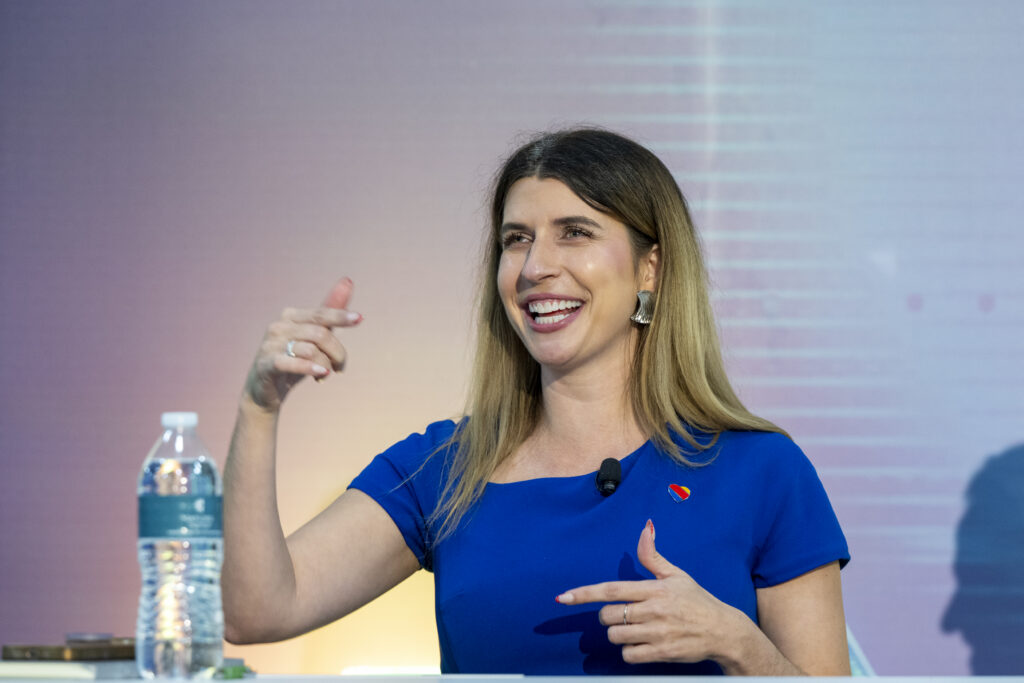
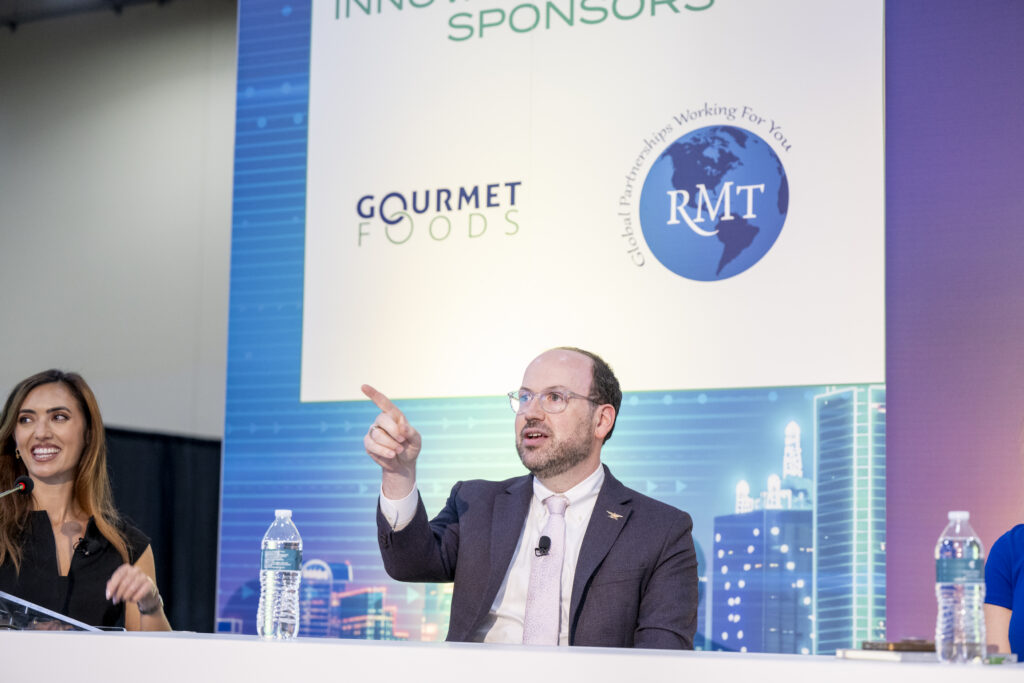
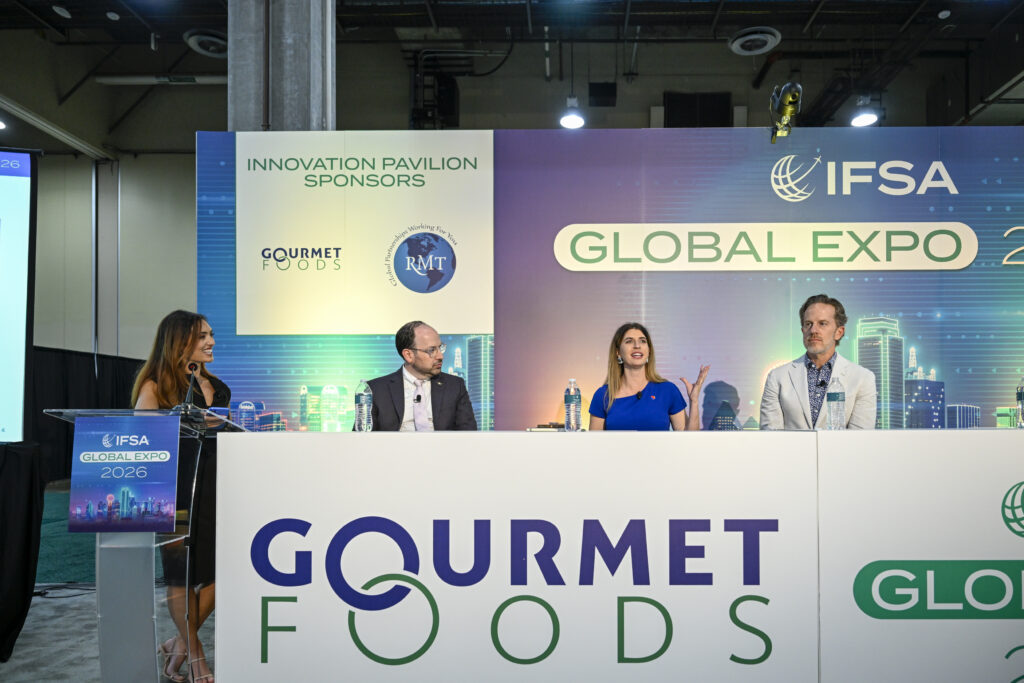
Airlines continue investing in premium products, but better hospitality takes more than simply adding a recognizable brand or a new amenity on board. During a thought leadership session at IFSA Global Expo, “Premium by Design: The New Era of Airline Hospitality,” ATL Live host and moderator Savannah Louie joined Delta Air Lines Managing Director of Brand Experience Ekrem Dimbiloglu, Southwest Airlines Director of Inflight Services Elly Jurgensen, and JSX Vice President of Hospitality Devin Burns to discuss how airlines can make travel feel more personal while still delivering products reliably at scale.
The panel focused on how attention to small details across food and beverage, lounges, personalization, service recovery, and digital tools can shape whether an upgraded product feels different to the passenger.
Making Premium Work at Scale
During the panel, Dimbiloglu revealed that Delta served roughly 800,000 Shake Shack burgers onboard last year, or nearly 2,200 per day, showing the scale required for success behind what may look like a simple inflight meal. “When you’re running an operation of 5,000 flights a day, and we have 130 different catering kitchens across the system, how do you have a consistent taste from flight to flight?” he asked.
Delta wanted the onboard burger to taste like the one customers already knew from the synonymous fast food restaurant chain. The airline sourced the bun, beef, pickles, and cheese from the same suppliers used by Shake Shack and brought new equipment, including the tool used to smash the patty, into its catering kitchens.
“We knew if we were going to make a Shake Shack burger, it needed to taste like a Shake Shack burger,” Dimbiloglu explained.
Delta and Shake Shack chefs spent more than four months developing and testing different versions before serving the burger onboard. The process shows the challenge airlines face when bringing a familiar brand into the cabin. The name may get a passenger’s attention, but the product still has to match the expectation that comes with it.
“If we’re associating a great brand like Shake Shack with Delta’s burger, it’s got to taste just like they expect,” Dimbiloglu said.
Southwest faces many of the same operational questions with its onboard snacks. Jurgensen explained that customer testing may identify what people want, but the product still has to work once it reaches the aircraft.
“We want to make sure not only is it a product our customers desire, but something that our operation can execute consistently.”
Elly Jurgensen, Southwest Airlines
“We want to make sure not only is it a product our customers desire, but something that our operation can execute consistently,” she said.
Southwest evaluated more than 200 snack options and found that customer preferences sometimes contradicted each other. Someone might say they want a high-protein or lower-calorie option before later expressing they would choose something more indulgent.
“Sometimes your products have to be anchored into ‘this is going to be the high-protein option,’ or ‘this snack is going to be the indulgent option,’” Jurgensen explained.
Southwest then looks at storage, packaging, cleanliness, sourcing, and how long a product may remain onboard as an aircraft moves through its point-to-point network, which means it has to stock them differently to a hub and spoke carrier. These details determine if something that performs well in customer testing actually works in daily operations.
She revealed the detailed process behind choosing Wonderful Pistachios, one of its newest snack partners. “Our flight attendants do some cleaning in between turns. Cleaners come on board only in the evenings, and so the cleanliness of the product is really important. Just using Wonderful, for example, when we took them up in the air we tested three different flavors, and they all got a separate cleanliness score. Even when we were presenting our recommendation to our executives, you could see them trying to wipe the residue off their hands on certain ones more than others, and so we want to make sure not only is it a product our customers desire, but something that our operation can execute consistently while keeping our cabin clean.”
Building a Premium Experience Around the Little Details
For Delta, the difference often comes from details passengers may not notice individually, but feel when they all come together. “Everything that we do at Delta is all about the details,” Dimbiloglu said.
Delta looks at everything from the pantone color of a product to the fabric used for an amenity kit. Those decisions may seem small on their own, but Dimbiloglu argued that together they can shape how a passenger views the product.
“Individually, those elements may seem not so important,” he explained. “But if you can string six, seven, eight of those things together, you end up having this great product.”
That same thinking extends to Delta One lounges at New York JFK, Los Angeles, Seattle, and Boston. Beyond food and drinks, the spaces include massages and shoe shines.
“We hear this all the time from Delta customers who say that, you know what, I love getting to JFK three hours early because I can go to that lounge, have a great meal, and feel pampered before my flight,” Dimbiloglu said. He added that Delta has seen a significant lift in Net Promoter Score (NPS) among customers who use the lounges, with satisfaction increasing as they spend more time there.
Meanwhile, JSX takes almost the opposite approach to time at the airport. Rather than giving travelers a reason to arrive hours early, Burns said the carrier focuses on getting them from arrival to the aircraft quickly.
For JSX, delivering on its 20-minute promise requires the airline to look closely at valet, baggage, check-in, security, and boarding. If one step slows the process, the carrier looks for the source of the problem.
“If there’s a line somewhere, we need to figure out what the pinch point is,” Burns said. “We need to solve that.”
Delta and JSX take very different approaches to airport time, but both connect hospitality to what travelers value. One gives passengers a reason to arrive earlier, while the other gives them more of their time back.
“Premium can be alcohol, but very much so the menu overall needs to include great optionality beyond that,”
Devin Burns, JSX
Giving Passengers More Choice
Choice gives airlines another way to make service feel more personal. Southwest built that idea into its extra-legroom product by offering customers a choice of snacks followed by a complimentary premium beverage. Jurgensen said the airline intentionally lets passengers choose the snack first so they can then select a drink that works with what they picked.
“[The question is] what is the product we’re actually serving to our customers, and what is the service that we’re delivering,” she said.
For Southwest, those two parts need to work together. “We were really intentional on selecting the product for those customers,” Jurgensen explained, pointing to recognizable brands, quality ingredients, and upgraded packaging.
At the same time, Southwest does not want the upgraded product to take away from the hospitality it delivers throughout the cabin. Assigned seating now gives the airline more information about who sits where, opening another opportunity for crews to personalize service.
“We’re just getting started with how we elevate that personalized service across the entire cabin,” Jurgensen said.
Delta is taking a similar approach by allowing some premium customers to share preferences before they board. Delta One passengers can indicate if they plan to eat in a Delta One Lounge, want to dine quickly onboard and rest, or want to go right to sleep.
“Customers just want to be recognized,” Dimbiloglu said. “They want to be greeted by name. They want to know that they matter to you. They want things personalized to themselves.”
The harder part comes from bringing that same level of personalization to a larger number of travelers. “It’s one thing when there’s 50 customers in a Delta One cabin,” he said. “It’s another thing when there’s 400 customers across the plane, and you’re trying to personalize that experience to every single one.”
Delta has not fully solved that challenge, but Dimbiloglu said teams continue working on ways to bring more personalized service across the aircraft.
Putting Crews at the Center
While products and technology can support hospitality, the flight crews shape how travelers remember the trip. Delta gives its 29,000 flight attendants access to SkyPro devices with information about passengers onboard. That can include loyalty status, missed connections, birthdays, and other details that help employees better understand the customers.
“Our people are the best representation of our brand,” Dimbiloglu said. “They’re professionals in their job.” When something goes wrong, flight attendants can use the device to award SkyMiles immediately, an amount they personally believe is fitting depending on the issue, rather than sending the passenger through another customer service process.
“You can’t create a standard operating procedure that’s a manual of ten pages of how you should handle this customer,” he said. That gives crew members more freedom to decide what makes sense for each situation instead of treating every customer the same way.
Burns sees the same need for employee judgment at JSX. “Customer recognition is super important,” he said. “Making things specific to a customer, recognizing the customer, cultivating service around that.”
He considers recovery just as important. If a rolling delay stretches to two hours, employees might order food from a nearby restaurant for people waiting in the lounge. “It may be pizza,” Burns said. “It is simple, but it takes care of the customer.”
For Burns, passengers care less about whether the airline considers a disruption controllable and more about how the airline responds. “They had a bad experience, so let’s own it and let’s fix it,” he said. He believes that means apologizing, fixing what the airline can, and giving the traveler a reason to return.
Similarly, Southwest uses crew feedback to determine whether new service ideas work in practice. Jurgensen said the airline conducts time studies, receives regular feedback from flight attendants, and can adjust a service after launch. She used the example of offering “extra legroom customers the choice of snacks starting at 300 miles versus our typical snack offering at 250 to account for the [extra] time. And that was feedback that we received […] I think that continues to be the repeated message: how do we consistently deliver?”
“We knew if we were going to make a Shake Shack burger, it needed to taste like a Shake Shack burger.”
Ekrem Dimbiloglu, Delta Air Lines
Expanding What Premium Can Mean
The discussion also pushed beyond some of the more traditional ideas of what makes an experience feel premium. At JSX, Burns pointed to products such as Kyoto-style nitro coffee as one example of how the airline can make its beverage menu more interesting while giving non-drinkers better options.
“Premium can be alcohol, but very much so the menu overall needs to include great optionality beyond that,” he said. The carrier can use seasonal products, items tied to a destination, or something passengers may not have tried before to make a small menu feel more distinctive.
“Beyond what’s obvious and what you know – you’ve got to have Diet Coke and Coke – but beyond that, what else can you offer that’s fun?” Burns asked.
Southwest is looking at a similar question based on flight length. Jurgensen said the airline does not plan to introduce full meal service, but it sees opportunities to adjust its snack program on longer routes.
The carrier already offers its select-a-snack box on mainland-to-Hawaii flights and continues evaluating how food and beverage should change as flight length increases.
“We have some opportunities coming ahead where we can evolve snack programs to meet the customer needs based on mileage band,” Jurgensen said.
Connecting Hospitality Beyond the Product
Digital tools could give airlines another way to make service more personal before a crew member even speaks with the traveler. Dimbiloglu identified Delta’s digital experience as one area where the airline sees more room to improve. “We’ve got to have a stronger connection digitally,” he said.
For Delta, that means moving away from generic communication and using the information the airline already has to make messages more useful to each passenger. “Making those messages specific to you and not seem generic is an area that I think we’re investing in,” Dimbiloglu explained.
The next step for airline hospitality is not just adding more products, but making everything work together. A branded meal should taste the way passengers expect, snacks need to work within the operation, digital tools should give customers useful information, and crews need the flexibility to step in when something changes.
Burns brought the discussion back to the basics of hospitality. For him, that still means “welcoming every customer,” thanking them for their business, and using their name whenever possible. “All of those things make the food taste better and the drink more crisp,” he said. “The flight seems shorter.”