

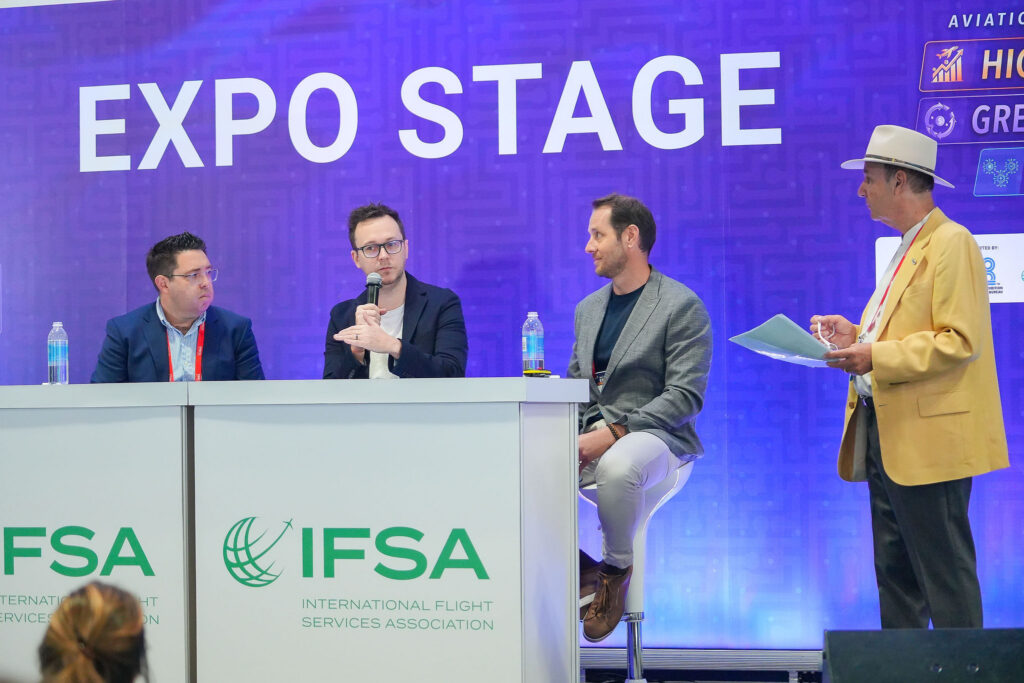
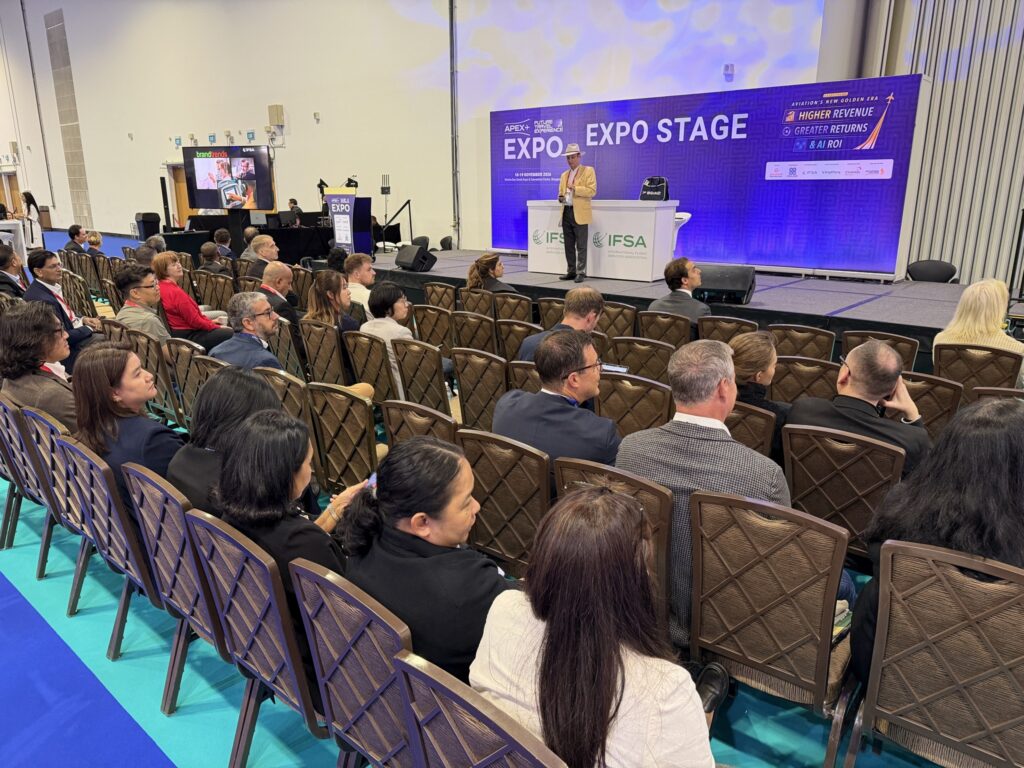
At APEX FTE EXPO 2026 in Singapore, an IFSA panel explored how hospitality can influence the passenger experience, airline loyalty, and customer satisfaction. Moderated by JCConsulting CEO Jeremy Clark, the session brought together dnata Catering & Retail Executive General Manager of Product Robert Smithson, Air New Zealand Head of Culinary Justin Koen, and Loyalty Status Co. CEO Mark Ross-Smith.
Together, they discussed how inflight food and beverage service can shape travelers’ airline choices and encourage passengers to return. The panelists explored how airlines can maintain service quality while managing costs, meeting passenger expectations, and building stronger connections with customers.
Why Hospitality Matters in Aviation
Clark opened the session by asking whether airlines should focus on transportation or hospitality. Looking back at the industry’s history, he explained that airlines once competed heavily on service, but over time, ticket prices became a bigger part of how they attracted passengers. Clark questioned whether airlines have lost some of the hospitality that once helped them stand out.
Food and beverage service, Clark argued, should be viewed as an investment rather than simply another expense. According to figures he presented, catering accounts for approximately 5 to 6 percent of operating costs at a typical full-service airline, yet it can have a significant impact on how passengers remember their flights.
Clark shared findings from passenger research conducted in Asia. He cited a 2024 survey in Thailand and Indonesia in which approximately 70 percent of respondents indicated they would avoid an airline following a negative inflight service experience. Separate research showed that 68 percent of passengers could remember a meal served on a flight between six months and three years earlier.
For Clark, these findings demonstrated why airlines should consider the impact of hospitality when making catering decisions. The industry ultimately depends on passengers, and the way airlines treat them can influence whether they return. “We’re in the business of looking after people,” he said, emphasizing that airlines are judged by how they treat their customers.
Balancing Costs With Passenger Satisfaction
Maintaining food quality while managing expenses remains a challenge for airlines and catering providers. Smithson explained that dnata focuses on delivering value to airlines and passengers rather than simply offering the lowest-cost product.
“For us, it’s not just about looking at cost,” Smithson said. “It’s about value.” He described inflight dining as part of the entertainment experience, explaining that passengers interact with the food and meal tray in front of them, not just the entertainment screen.
The difference between a handmade omelet and scrambled eggs served as one example of how meal preparation can affect passengers’ perceptions. Smithson explained that catering providers need to help airlines understand the value of these differences when deciding what to serve onboard.
From an airline perspective, Koen discussed the pressure to manage operating expenses, particularly fuel costs. While reducing catering expenses may seem like an opportunity to save money, even small changes can affect passenger satisfaction.
To demonstrate this, Koen described an experiment in which Air New Zealand deliberately reduced meal quality on one route without removing any items from the menu. The changes resulted in a seven-point decline in customer satisfaction scores.
“We didn’t take anything off. We just lessened quality,” Koen said. Although the changes were intended to deliver savings of approximately 1 to 2 percent, the decline in satisfaction raised concerns about the longer-term impact on customer loyalty.
How Hospitality Influences Airline Loyalty
Hospitality can influence which airlines passengers choose, particularly frequent flyers who have several carriers to choose from. Ross-Smith explained that these travelers often place greater value on service and the overall experience than on finding the lowest fare.
According to Ross-Smith, members of higher frequent flyer tiers account for approximately 30 percent of revenue at many airlines. Providing these passengers with a better experience can encourage them to remain loyal, particularly when they have the flexibility to choose between carriers.
Premium cabins provide one example of how airlines can offer additional value while charging higher fares. “You can charge more and give more at the same time,” Ross-Smith said, explaining that frequent flyers are often willing to pay more for a better experience, especially when their employers cover the cost of travel.
Rather than focusing entirely on reducing expenses, Ross-Smith encouraged airlines to recognize the value of these passengers. He pointed to the introduction of loyalty tiers above traditional platinum levels, which encourage travelers to spend more while helping airlines retain their highest-value customers.
Clark emphasized that airlines should not overlook economy-class passengers when investing in service. Today’s economy passenger could become tomorrow’s business-class customer, making the experience in the back of the aircraft important for building long-term loyalty.
Smithson agreed that food quality matters in Economy Class, particularly in Asia, where airlines are paying greater attention to the meals served to passengers. Using biryani as an example, he explained that a relatively inexpensive dish can leave a strong impression when prepared well and authentically.
Using Food to Strengthen Airline Brands
Beyond passenger satisfaction, food and beverage service can help airlines reflect their identities and create memorable experiences, particularly when those experiences connect travelers with the airline’s home country.
At Air New Zealand, inflight service provides an opportunity to introduce passengers to the country’s culture through food and hospitality. Koen explained that the airline can share its identity throughout the journey, from the moment travelers board until they reach their destinations.
“We’re selling New Zealand, and we’re taking New Zealand to the world,” Koen said, emphasizing how the airline uses its onboard experience to represent the country.
The airline’s familiar “kia ora” greeting immediately introduces passengers to the Air New Zealand experience. Another example is the tradition of offering boiled candies, known as lollies in New Zealand, before arrival.
Although the candies cost very little, they have become a memorable part of the airline’s service. Koen explained that creating meaningful experiences does not always require expensive products, pointing to the candies as an example of how small details can leave a lasting impression.
Ross-Smith shared a personal example of this connection, recalling a family trip to Disneyland when he was seven years old. Despite everything he experienced during the trip, the boiled candies served on his Air New Zealand flight remained his strongest memory of the journey.
Creating an emotional connection with passengers at a young age, Ross-Smith explained, can influence how they view an airline later in life. As those travelers grow older and begin flying more frequently, their memories may help shape which carriers they choose.
Clark pointed to Emirates as another example of how airlines can use their products to strengthen their brands. An advertisement highlighting the airline’s onboard bars and showers demonstrated how premium service can influence passengers who may ultimately purchase economy-class tickets rather than fly in First or Business Class.
Although many viewers may never experience these premium products themselves, the advertising helps create an image of the airline’s overall experience. Clark argued that this approach can influence how passengers view a carrier regardless of which cabin they book.
Personalizing Service for Different Passengers
Airlines are increasingly using passenger information to develop inflight menus that better reflect travelers’ preferences. Smithson explained that catering providers now receive more information from airlines than they did five or six years ago, including passenger demographics, onboard performance data, and customer satisfaction scores.
This information helps airlines and caterers adjust meal times and menu choices based on the route, passenger demographics, and cultural or religious preferences. For example, a flight that traditionally offered breakfast might better suit a lunch service, while passenger profiles may influence whether airlines serve more chicken or beef.
Koen emphasized the importance of looking beyond broad assumptions about what passengers want based on where they sit. Air New Zealand pays particular attention to the food preferences of travelers on its Asian routes, where passengers may have different expectations about meal choices and serving times.
According to Koen, passengers traveling to Asia can have specific preferences about what they eat and when meals are served. He described Air New Zealand’s Perth route as “basically a no spice route,” showing how the airline adjusts its menus to suit different passenger groups.
For Ross-Smith, personalization extends beyond the meals themselves to recognizing loyal passengers onboard. Some airlines give frequent flyers with higher status priority when selecting meals, helping ensure they receive their preferred choices.
However, this practice is not consistent across the industry. Ross-Smith pointed to Malaysia Airlines as an example of a carrier where top-tier frequent flyers may not always receive their first meal choice, despite their continued loyalty.
Failing to recognize these passengers could put their loyalty at risk, particularly when they have other airlines to choose from. Ross-Smith emphasized that small service benefits can help airlines retain existing customers rather than simply encouraging them to spend more.
Throughout the discussion, the panelists emphasized that hospitality goes beyond the cost of an inflight meal. By maintaining food quality, understanding passenger preferences, and recognizing loyal customers, airlines can create memorable experiences that encourage travelers to return.