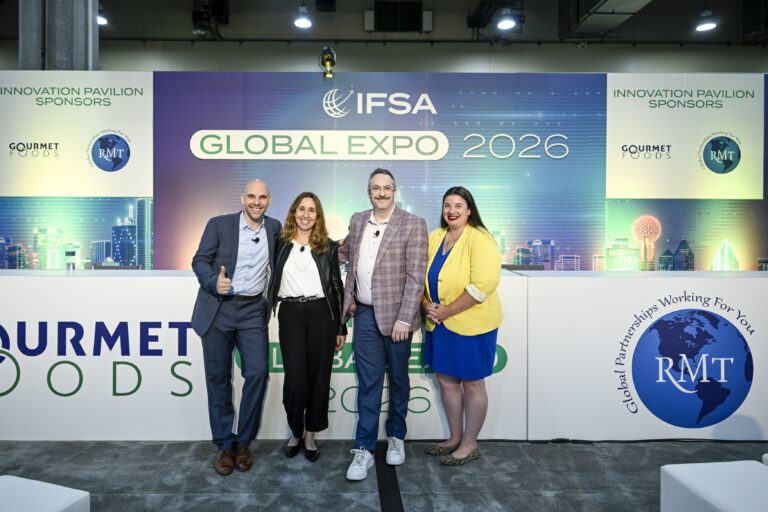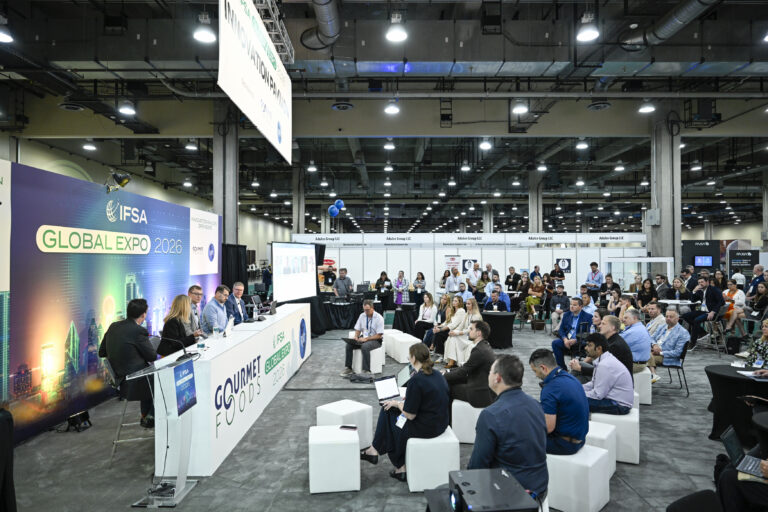
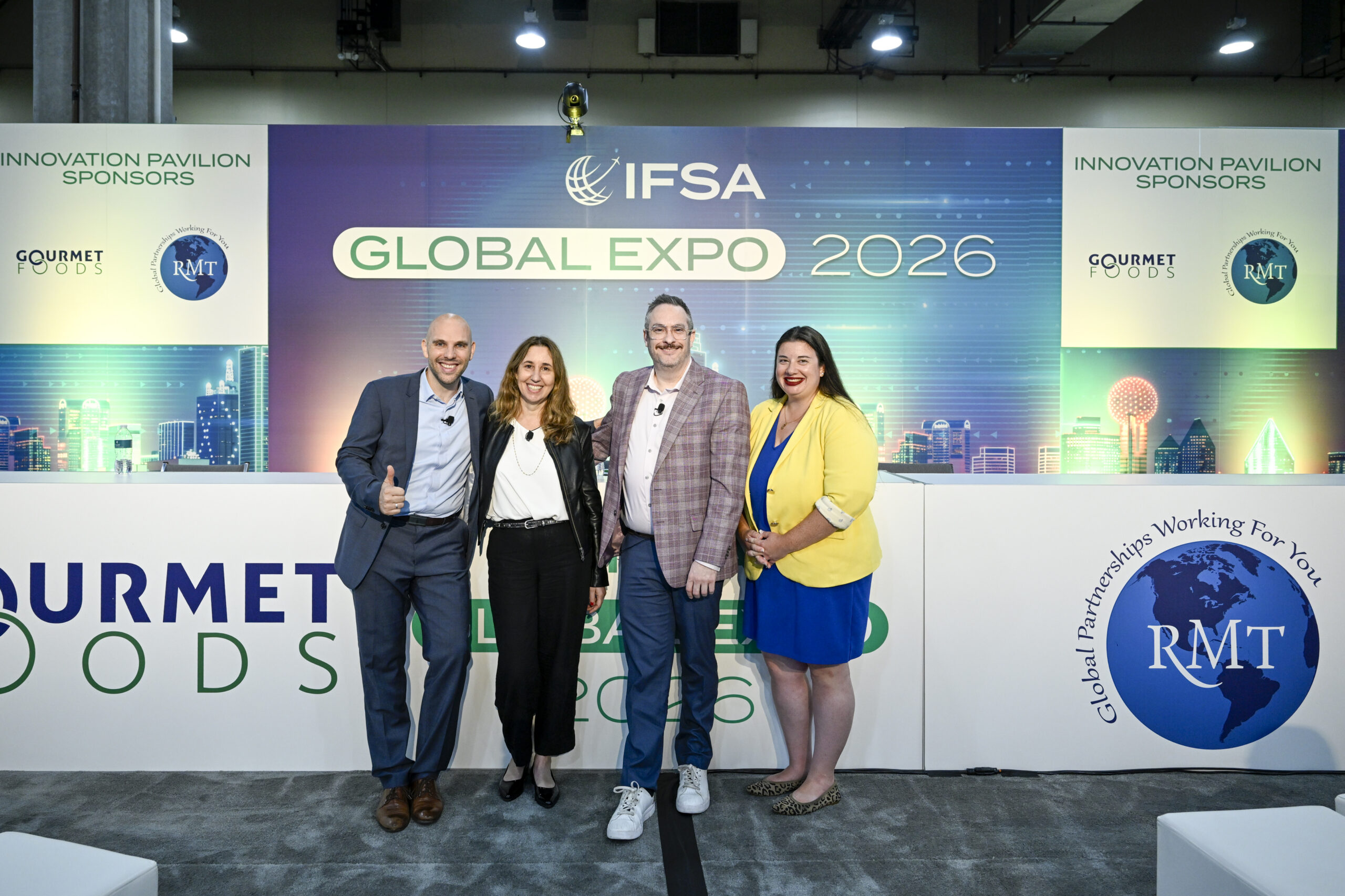
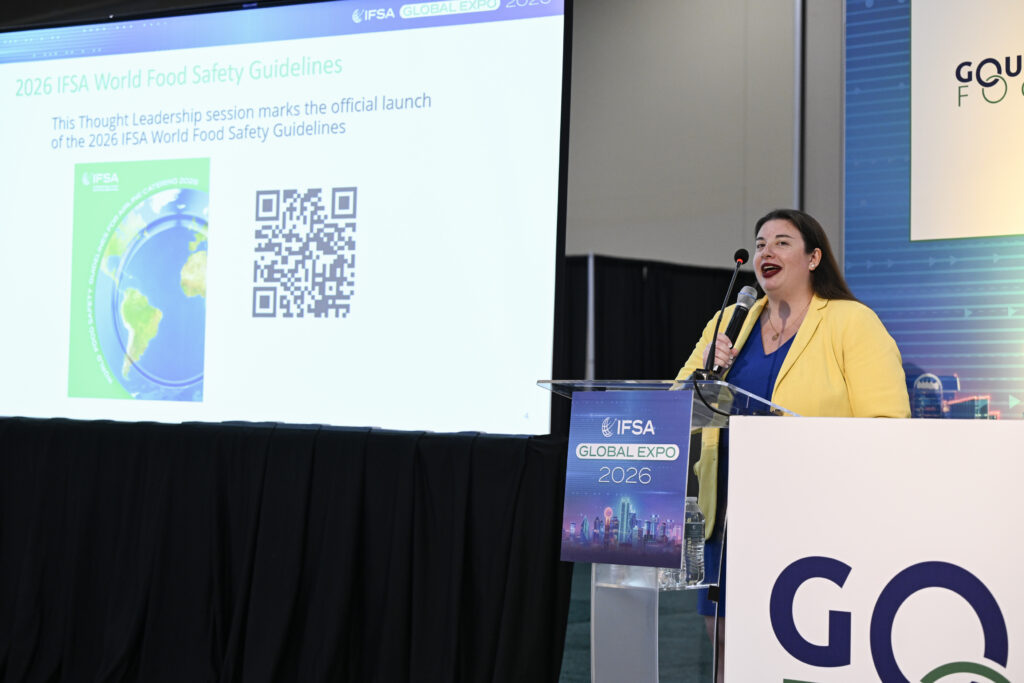
During a thought leadership session at the 2026 IFSA Global EXPO in Dallas, Texas, panelists examined the role of food safety in passenger trust and operational consistency across the inflight supply chain. The discussion took place under the headline, “Food Safety First: The Future of Global Inflight Standards,” which also marked the official launch of IFSA’s new World Food Safety Guidelines. The latest iteration of the document combines the association’s previous ‘Guidelines’ and ‘Implementation Guide’ into a single resource for airline catering operations.
Moderated by IFSA Government Affairs Director Allison Cooke, a leader in food policy who has previously explained the importance of the new guidelines, the panel also heard from esteemed industry leaders including Gategroup Global Food Safety Process Owner Laura Tantardini; Newrest Group QSSHE Director and board member Fabien Malbranque; and Porsche Consulting Aerospace & Transport Partner Joshua Hirschheimer.
Cooke opened the panel by defining the World Food Safety Guidelines: “The guidelines establish the comprehensive requirements necessary for the effective design, implementation, maintenance, and continuous improvement of a food safety management system […] in alignment with internationally recognized industry standards.”
But before opening the session up to the panelists, she clarified, “It should be noted the guidelines are just that – guidelines. Caterers pursuing certification should consider additional specific requirements defined within their relevant certification schemes.”
Catering to “One of the Most Complex Food Supply Chains in the World”
Cooke addressed the first question to Malbranque, who she asked, “Why is it so important for airline catering to have food safety as a core principle?”
Malbranque, who oversees Newrest’s global quality, food safety, occupational health and safety, security, ramp safety, and environmental programs across operations in approximately 60 countries, as well as being actively involved in ISO Technical Committees, answered, “The airline catering business is probably one of the most challenging, most complex food supply chains in the world […] this complexity means that food safety cannot just be a regulatory compliance topic. It cannot just be a ‘food safety people’ topic. It has to be a core principle, a management principle.”
Malbranque listed the different complexities presented by airline catering, from “managing thousands of products across large supplier networks” to “food being put on board of an aircraft is usually produced hours before the flight will depart;” a flight which is then potentially subject to delays and disruptions.
“Procedures are important, but food safety culture is, at the end of the day, what people will do when no one is watching them.”
Fabien Malbranque, Newrest
He rounded off by noting, “the consequences of a food safety management system failure are huge. You have consequences, of course, on the passenger. But besides that, you have a big impact on the crew inside the aircraft, on the airline reputation, and at the end of the day on public confidence, so we cannot compromise that.”
Hirschheimer added that if anything, the complexities of the airline catering supply chain continue to increase, magnifying the importance of food safety within a changing industry landscape. “Customer requirements are increasing, the chefs are becoming more creative, the airlines are becoming more demanding, and it just becomes that much more challenging to manage the supply chain. I think we’ll see some examples later today throughout the venue of some of the really creative things that, if you look back even 5-10 years, would never have been achieved.”
Creating a Successful Food Safety Culture
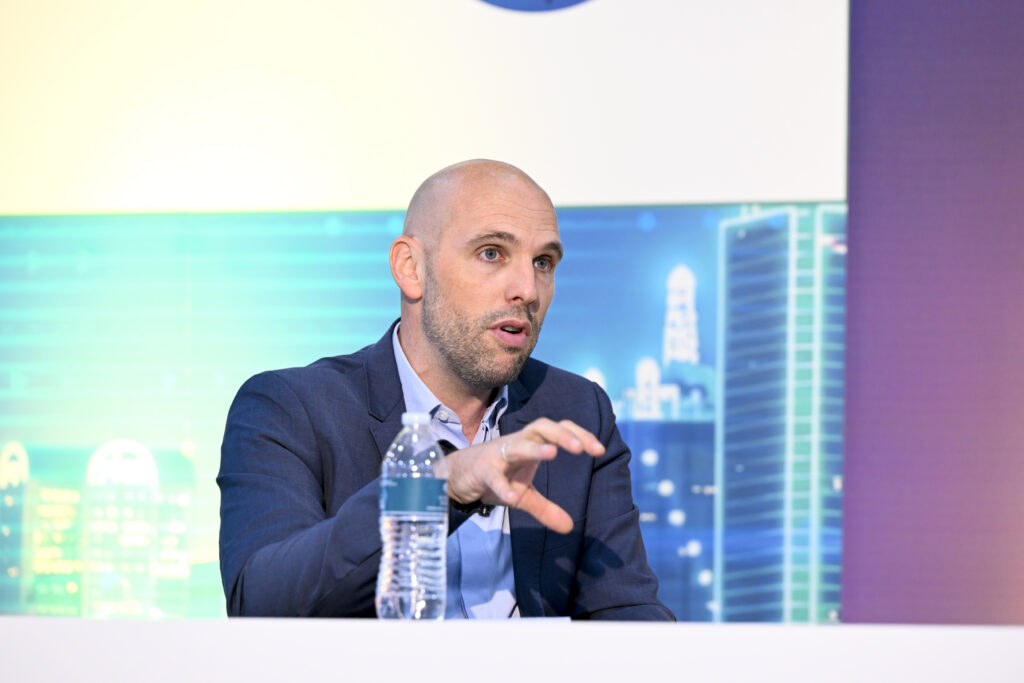
On how to make food safety a central part of an organization’s culture, Malbranque offered, “Food safety culture is not built only through procedures. Procedures are important, but food safety culture is, at the end of the day, what people will do when no one is watching them. It’s all the values that people will continue to follow.”
To build a strong food safety culture, he continued that organizations need to “see food safety not as an obstacle to creativity or to efficiency […] It’s when you see food safety as a shared responsibility between everyone.
“To make it happen, one thing which is very critical is leadership, because people pay attention to what a leader will prioritize. On top of that is how you embed all your people into that objective of a shared responsibility. It’s about creating ownership at all levels of your organization, and it’s about developing accountability.”
Hirschheimer agreed, stating, “If you don’t feel that you’re accountable, you’re not going to make a change. And they always say in teamwork, ‘you’re only as strong as your weakest link.’ Your food quality is only going to be as strong as any break in that chain.”
Moving Food Safety from Reactive to Predictive
Cooke then asked Hirschheimer how the industry, which has traditionally relied on audits, inspections and manual checks, could evolve beyond simply detecting issues to actually preventing them.
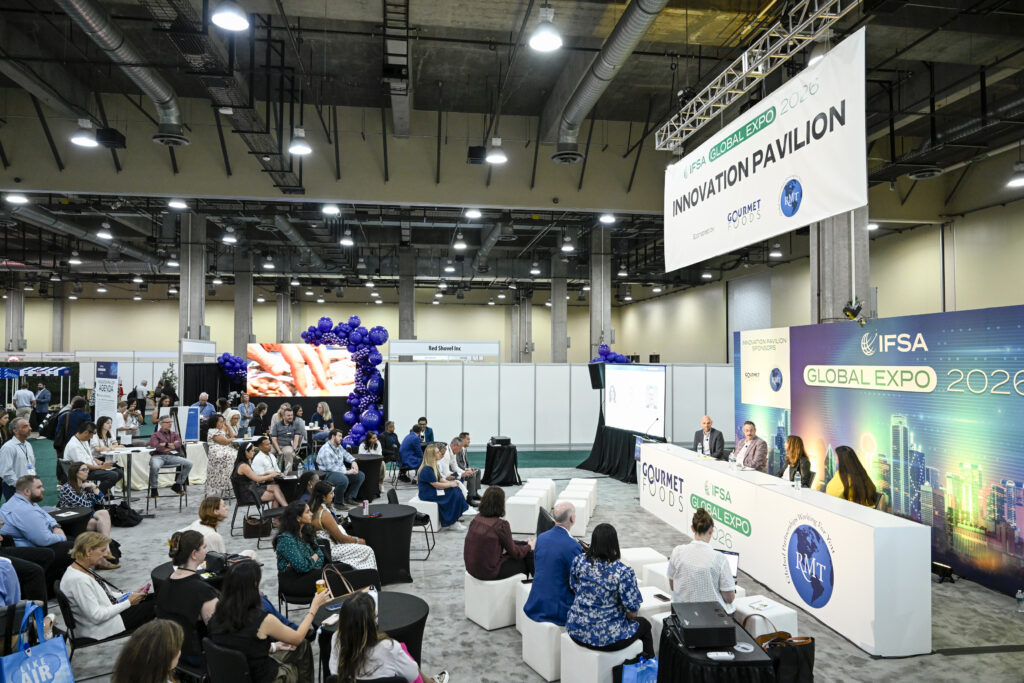
“The Internet of Things is really at our fingertips […] It’s looking at developing a digital twin of your entire execution plan and having sensors monitoring temperature in real time, so that you can take action before it becomes an issue,” he responded. “Food safety that you have to take action on often becomes waste. It’s much easier to address these challenges and prevent waste if we look at it in advance.
“It’s not just about automating with robotics and robotic arms. It’s using the digitization layer to understand all of the environmental aspects that are happening, so that we can avoid looking at contaminants.”

How IFSA’s World Food Safety Guidelines Can Push the Industry Forward
Tantardini, who in addition to her everyday role serves as chair of Gate Group’s Global Food Safety Council, leading regional and cross-functional collaboration and governance initiatives aimed at enhancing food safety performance and fostering a strong food safety culture across the company, was central to IFSA’s World Food Safety Guidelines update.
She told the audience, “Having this minimum standard helps to ensure a consistent level of safety across the different types of environment where we work […] they serve as a benchmark that demonstrates the commitment of the industry to food safety.”
“Instead of reinventing everything on their own, [companies] can use that baseline in order to spend more time and energy on what at the end of the day is important, , which is the shop floor”
Fabien Malbranque, Newrest
In terms of the timing of the new document, Tantardini detailed that at the same time as IFSA decided to merge its two documents, important changes were happening to technical standards. “The new technical standard of ISO 22002-100:2025 that merges the common prerequisites of the different technical standards needed to be included in the guidance tool.
“There was also a big change to the technical standard that applies to airline catering. It’s not the technical standard ISO 22002-2 anymore – in 2025, ISO decided to remove airline catering from the scope of the ISO 22002-2 and it’s now in ISO 22002-1. We needed to change that in the guidelines too […] we also wanted to make them more user-friendly.”
Malbranque said that by making the guidelines more user-friendly, it allowed companies to use them as a strong foundation and focus their energies elsewhere. “Instead of reinventing everything on their own, they can use that baseline in order to spend more time and energy on what at the end of the day is important, which is the shop floor – how will you build the culture? How will you work on training? How will you impact leadership?”
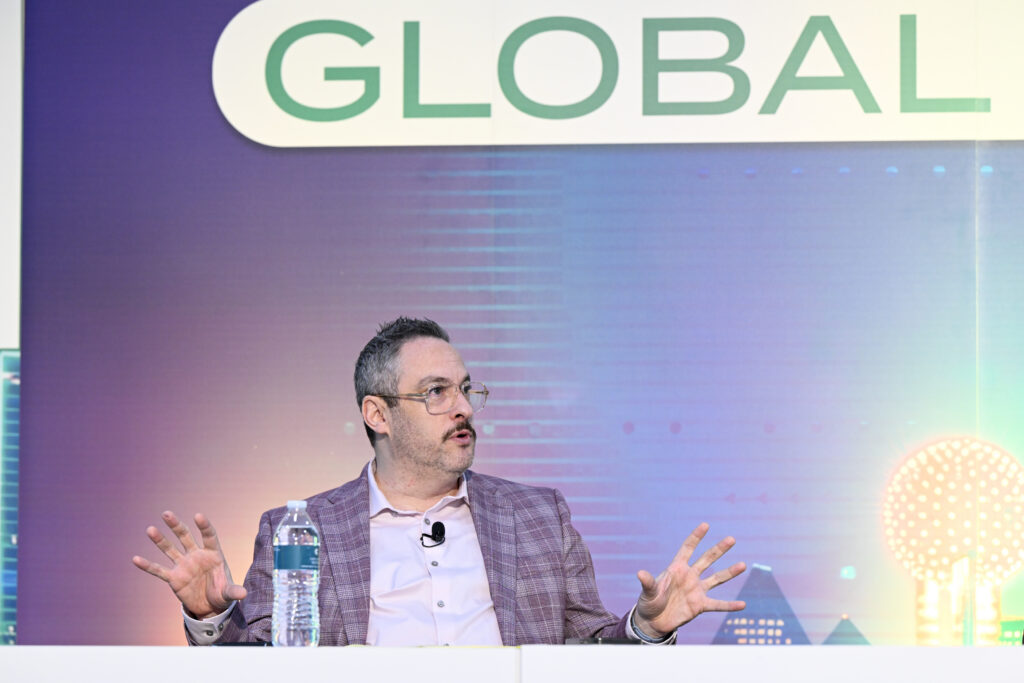
Looking to the future, Tantardini said she hopes that the next chapter of the guidelines will see it “continue evolving, moving beyond being a document and regarding more a living and collaborative resource that embraces innovation, because that’s the way we need to go.”
Hirschheimer gave a practical example of this, noting that travel has become a bit of a “bragging sport” with passengers taking photos of their meals, which has led airlines to view it as an important differentiator and want to be original in the sphere.
“Being able to fly out of Atlanta and have Fox Brothers [with Delta Air Lines], or being able to fly out of there and have Pecan Lodge [with American Airlines], it’s a big distinction factor […] It’s being able to build a system that can offer menu changes much more frequently, because biannual is no longer going to be acceptable.
“It’s important that these standards and these processes become carbon copies of each other and much more modular, so that you can then go in and say, ‘keep these side items, add a new entree,’ and be able to build that into the system and execute it.”