As the Co-founder of New Era Partners, a division of iFoodDS, Andrew Kennedy helps companies integrate compliance with the US Food and Drug Administration (FDA) Food Safety Modernization Act, FSMA 204 (also known as the Food Traceability Rule) into their operations. In 2024, he hosted a series of three webinars for IFSA members on the incoming regulation, which was initially due to come into force this January, but has now been delayed until July 20, 2028.
Two years on, he speaks with IFSA about the benefits and challenges of implementing FSMA 204 within the aviation industry, including how it has the potential to streamline catering operations and allow airlines to seamlessly deliver premium dining experiences to the correct passengers.
What is FSMA 204 and Why was it Created?
To provide some context on the Food Traceability Rule, Kennedy explained, “Before it was published in November 2022, you had what people called ‘one up, one back traceability,’ which was basically knowing where you got the food from and where you sent it to. There was no requirement for interoperability between companies, so each one could use their own terminology for the food, their own product description, commercial documents, purchase orders, and so forth for their records.
This meant that when faced with significant outbreaks of foodborne illnesses – Kennedy referenced salmonella caused by tomatoes and peppers during 2006 and 2009 as an example – it was incredibly difficult to trace the infection back to its source.
Kennedy was part of the group that wrote the new FSMA 204 ruling. It mandates the recording of Key Data Elements (KDEs) such as the Traceability Lot Code (TLC), product description, quantity and unit of measure and other such information that during Critical Tracking Events (CTE), which are classed as when food is received, transformed or sent somewhere new. They have to be available in an electronic format and, should the need arise, be shared with the FDA within 24 hours of a request being made.
The Challenges of Adhering to the New FTR
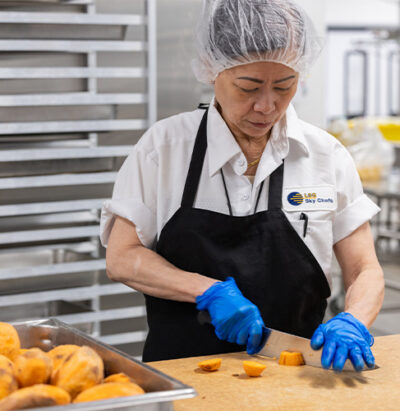
So far, so positive. However, the challenges faced by all those needing to comply with the new Food Traceability Rule, which includes everyone from farms to restaurants – and airlines, which Kennedy said had been largely ignored by the 2002 Bioterrorism Act for supply chain tracking that preceded FSMA 204 – is that the FDA didn’t specifically choose which format the information had to be recorded in, nor which technology companies are used to record it.
“The industry had to fumble around for a couple of years to land on some standards to use, and it’s still very much evolving right now,” said Kennedy. “The FDA realized if they turned the rule on in January 2026, people may still be discussing whether to use 1D barcodes or 2D barcodes; or whether to use the GS1 global location number or something else to identify the source; and if they should use RFID or IoT devices instead of barcodes. There were all kinds of different ideas that popped up. People are still hashing through some of the details, but we’re getting more alignment as an industry on how to do it.
“Those in restaurants and in inflight services, who are typically at the end of the supply chain, are trying to see what distributors and manufacturers are going to do. They should help develop and align with industry standards rather than go it alone.
“My recommendation is for inflight services companies to talk to the big distributors and big manufacturers, find out what they are planning to do, and then build their systems around that,” Kennedy concluded.
How Artificial Intelligence can Smooth the Transition
Kennedy believes that artificial intelligence (AI) technology, specifically in the form of data collection using smart glasses and data analysis using machine learning, will become integral for those working across the food supply chain, especially when meals are at the stage where they are being prepared.
“AI is pretty good at proving the negative. I worked with a large restaurant chain trying to roll out scanning in its storeroom, and the challenge that they were presented with was, how do we know when someone didn’t scan? AI can take multiple data sources and say, well we purchased this product, but apparently, we never scanned it or used it in the commissary.
“Data collection using smart glasses will capture most of the needed information and machine learning will fill in the gaps, realizing, ‘We received a shipment notice from this supplier with this lot code inbound, but we never pushed it into our commissary. What meals possibly could have used that lot code based on the time it was delivered and its shelf life.’” Kennedy believes this will be highly beneficial for those needing to comply with FSMA 204, because it will not add a lot of time or cost to the process.
In terms of day-to-day operations, he also argued smart glasses were particularly useful because they allow people working directly with food to stay hands-free. This would mean an improvement in productivity, as employees would not be stopping to constantly wash their hands after scanning or typing something on a handheld device.
“Optical character recognition with AI has gotten very good, so moving towards smart classes as a data capture option means users can look at a packing list and look at case labels, then AI can stitch the data together and create a pretty reasonable receiving record. Then the user can look at it and verbally confirm if it looks right or not. Smart glasses can expedite data capture and data processing, and I think this will really benefit the inflight services industry.”
Improved Traceability Allows Airlines to Command a Premium
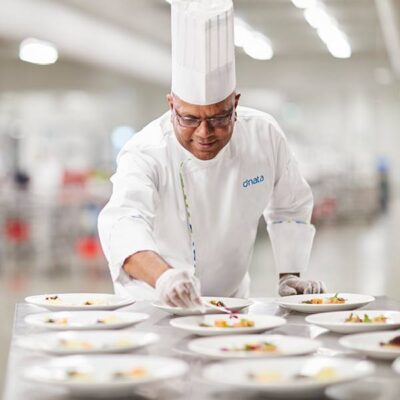
Using smart glasses would also mitigate human error regarding similar types of ingredients during meal preparation. Kennedy used the examples of heirloom tomatoes needing to be in a salad for First Class passengers, versus standard tomatoes in economy class meals.
“What’s interesting about FSMA 204 requiring the manufacturing or production location and the LOT code is it gives you the traceability back to the supplier. This allows people to do confirmations against their recipes. So, if your recipe calls out this specific grade and type of tomato, when the person goes to grab the case to take to their user station, imagine they’re wearing smart glasses that capture a lot code and the product description from the case label.
“Even though we may have hundreds of different heirloom tomato suppliers and the product identifiers can be different, AI can do that fuzzy match between product descriptions that is so difficult to do with traditional databases. It can be smart enough to see the product description from the supplier has the word heirloom in it, and the spec also has the word heirloom in it and say yes, that’s generally a match.”
Flexibility is the Key to AI’s Success
However, Kennedy is aware that any AI being used for this kind of job has a degree of flexibility built in. “If the AI says, ‘This should be an heirloom tomato, that doesn’t appear to be an heirloom tomato,’ the user has to be able to override it and say, actually it is. They need to be able to have a conversation with the app at that point.
“It has to have guardrails, because if you’re in the middle of making the meal and it has to be ready for a flight, you don’t want an AI bot stopping you and saying how you can’t make it,” he went on.
iFoodDS is actually in the process of exploring such AI technology, which Kennedy predicts will be ready for commercial release “sooner than I would have predicted even six months ago.”