

Global Recycling Day 2026: The Road is Still Long for Airlines and Caterers
Share
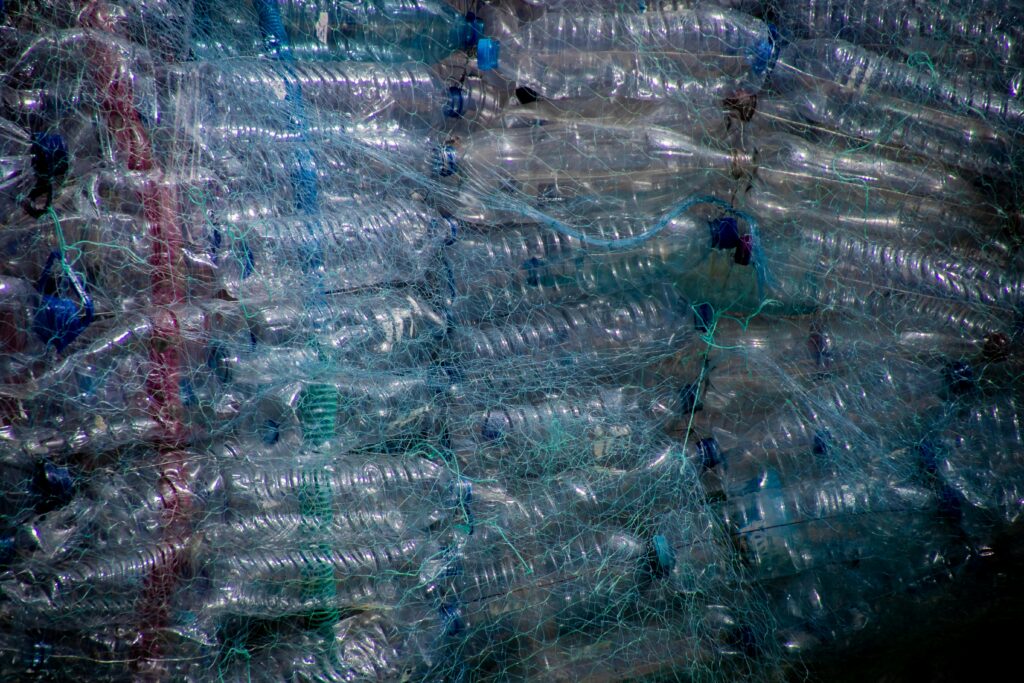
March 18 marks Global Recycling Day, and IFSA is taking the opportunity to dive into the complex topic of cabin waste. While airlines and suppliers are making incremental improvements to their operations where possible, their hands are often tied by regulatory requirements, which remain local rather than global. This is why industry bodies like IATA and data consultancies like the Aviation Sustainability Forum (ASF) are advocating for clearer international standards.
By extrapolating a snapshot of the live data collected on airlines partaking in the Aviation Sustainability Forum’s Cabin Waste Composition Audit (CWCA), created in collaboration with IATA, ASF believes commercial airlines generated approximately four million tonnes of cabin waste in 2025. For reference, that is the same weight as the Palace of Parliament in Bucharest, Romania, which is widely accepted to be the world’s heaviest building.
The positive news is that ASF believes around 30 per cent of this waste is recyclable, theoretically reducing overall cabin waste by more than a third. The company splits potential recyclables into the following categories: aluminum, bamboo cutlery, glass, paper and plastic. Last year, ASF believes recyclable plastic accounted for 13 per cent of cabin waste; paper for nine per cent; glass for four per cent; aluminum for 3 per cent; and bamboo cutlery for one per cent.
ICW Regulations Create Difficulties
However, recycling is only possible as long as the item has not been contaminated by animal byproducts (ABP). For the majority of international flights, anything that has come into contact with ABP is classified as international catering waste (ICW) and must be incinerated or go to landfill.
ASF CEO Diana Cawley explains that even if a coffee cup is technically recyclable, if it has had milk in it, for example, it must be treated as ICW. Interestingly, though, shelf-stable Ultra High Temperature (UHT) pasteurized milk and dairy creamers are not classified as ABP in the US, and nor are pasteurized processed cheese or individual portions of honey.
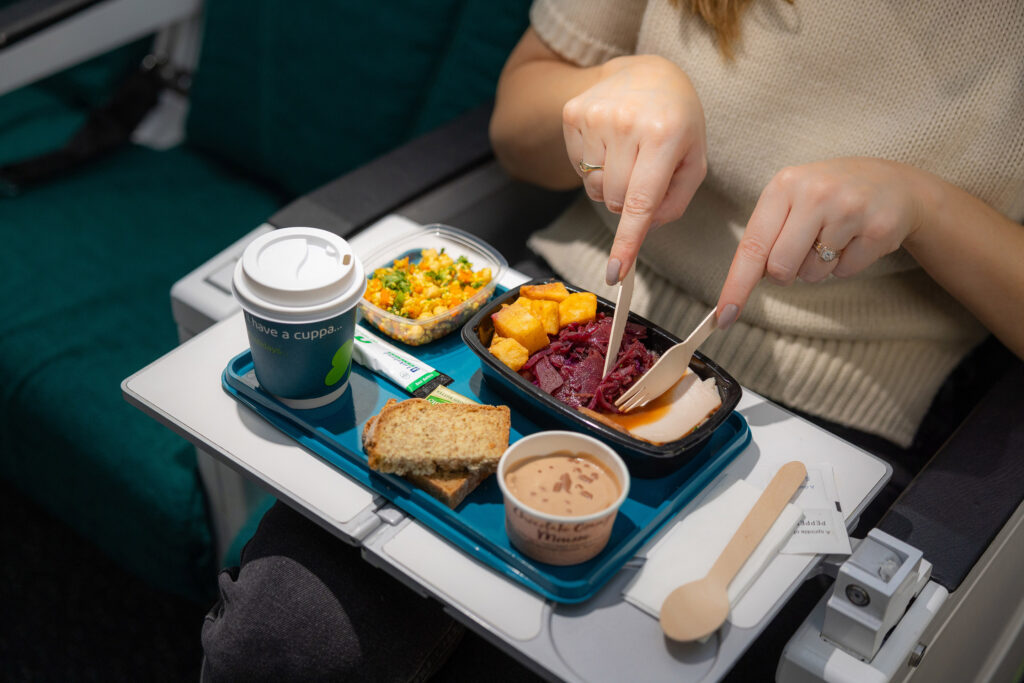
This kind of nuance is why education and training account for a very large part of an airline’s chance at success in terms of recycling programs. Both the crew and staff at the airlines’ in-flight catering partners must understand all the different regulations around waste, which continues to vary considerably between regions.
Therefore, financial and time constraints are a considerable challenge for airlines when it comes to undertaking the necessary steps to put new recycling programs in place, and not just in terms of training all its staff to the level of knowledge required.
This is something recognized by IATA in the second edition of its “International Catering Waste – A Case for Smarter Regulation” report, released in 2024. It states that “given the complex, time-bound nature of flight operations, segregating cabin wastes and recyclables from domestic and international flights can prove challenging and many airports or their respective animal health inspectors deem all cabin waste to be ICW.”
Trailblazers Forge a New Path Despite Challenges
In light of this, it seems worth celebrating that these difficulties are not deterring certain parties from trying to equip airlines with the tools necessary to increase their cabin waste recycling.
For example, in September 2024, US Customs and Border Protection (CBP) announced it was working with IATA and the US Department of Agriculture (USDA) Animal and Plant Health Inspection Service (APHIS) to set up local policy and procedures for recycling single-use products arriving in the US on international flights based on the resources available within each airport’s environment.
The program covers aluminum, paper and plastic. Airlines wanting to partake must work with CBP and APHIS on segregation on board, removal from the aircraft and final disposition, with a critical element involved being to understand the waste composition and quantities coming off the aircraft.
According to Cawley, there are reliable standard methodologies in place in the system to ensure common practice and identifying the final use for any recycled materials. And despite the effort involved, she confirmed that some airlines have been approved to recycle the aforementioned items at Hartsfield-Jackson Atlanta International Airport, Los Angeles International Airport, Seattle-Tacoma International Airport, John F. Kennedy International Airport and Newark Liberty International Airport.
The Biggest Obstacle: A Lack of Standardization
The success of existing recycling programs is more visible in places with the same regulations, such as across the US and within the European Union. For example, in November 2024, Alaska Airlines announced a partnership with Ridwell to recycle “Biscoff cookie wrappers, pretzel bags, and other snack packaging that usually end up in landfills,” all of which are exempt from ICW regulations in the US.
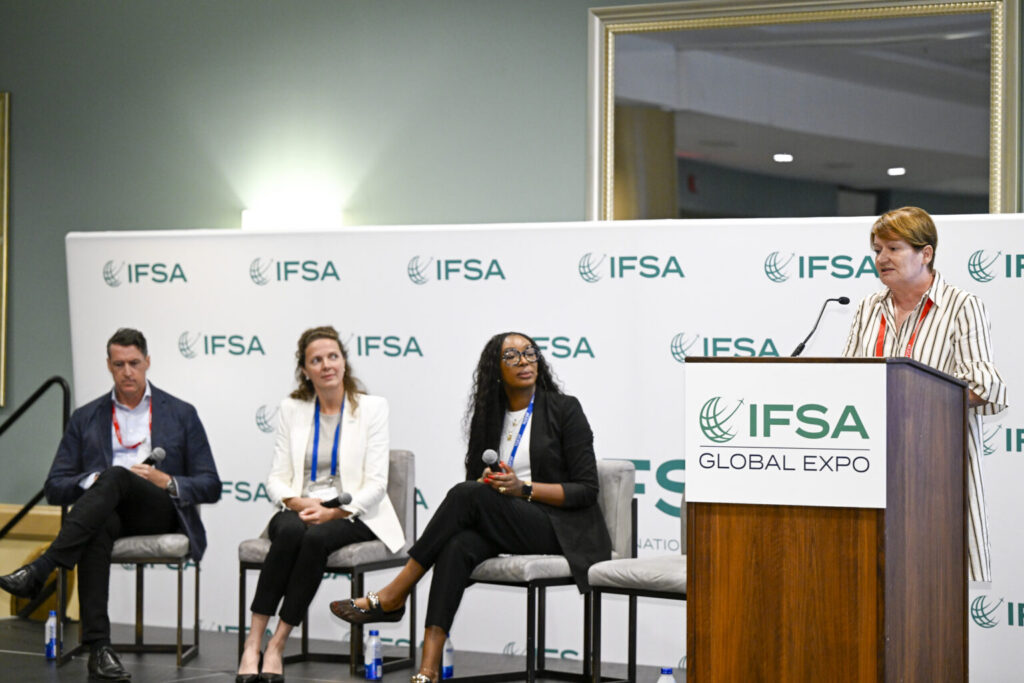
Similarly, at the 2025 IFSA Global EXPO, KLM Food and Product Specialist Matrix de Vries noted than when the European Commission clarified the rules for Category 1 waste for inbound flights in 2024, deeming that “any product that has not been in contact with food can actually recycle,” she said it transformed the carrier’s inbound sorting processes in Amsterdam.
Nonetheless, there are still grey areas within the EU when it comes to catering waste regulations. The EU recently announced it will completely ban single-use plastics by 2030, with “the proposed legislation aim[ing] to ensure that all packaging in the EU is recyclable by 2030.” Cawley commented that this is at odds with ICW regulations: “Not all items can be reused or recycled, so what will [airlines] use instead?”
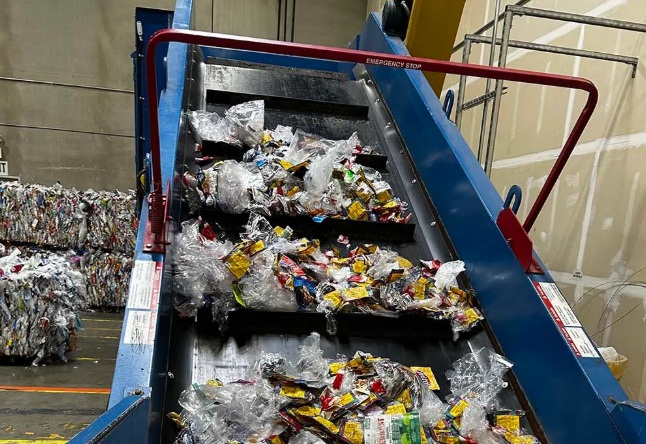
In IATA’s report, the association remarked, “Driven by passenger concerns and emerging single use plastic legislation, airlines are replacing in-flight products including cutlery and crockery with reusable or biobased alternatives. However, the environmental benefits of such a transition are significantly reduced if the resulting waste cannot be biotreated through aerobic (composting) or anaerobic digestion.”
Cawley, similarly to IATA, argues that for airlines the most effective way to avoid cabin waste is to implement global standards, but that these must take into account many, many small things involved in the recycling process, starting with the color of the recycling bags, which vary from country to country.
When asked who should be responsible for creating the necessary standards, Cawley replied instantly. “The trade bodies,” she said.
More Airlines Establish a Baseline to Work From
In an industry used to battling against adversity, it seems likely that change will come, but this will certainly require continuing collaboration between industry associations, governments, airlines and caterers.
The Aviation Sustainability Forum only began trialing its Cabin Waste Composition Audits in November 2023, so the company and its mission are still very young. However, Cawley confirmed it continues to see growing interest from airlines together with their caterers year-on-year.
“What our benchmark audits offer is trustworthy data, not just an opinion. Our standard methodology makes it far easier to start building meaningful recycling programs,” she stressed. “Making a return on the investment of the audit is achieved very easily.”